
Teeth whitening
Medically reviewed by Dr. Florin Cofar · last reviewed 17 October 2026
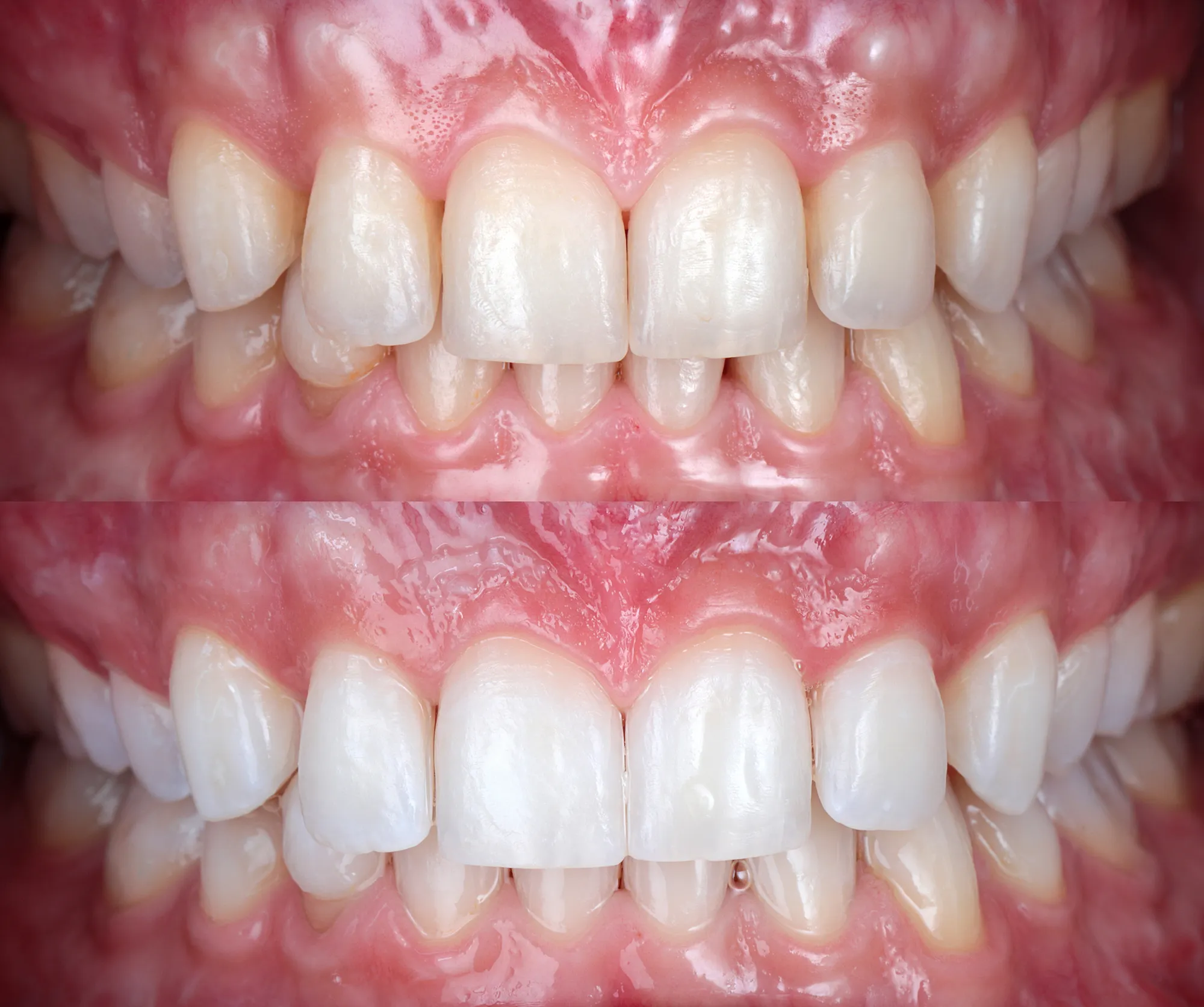
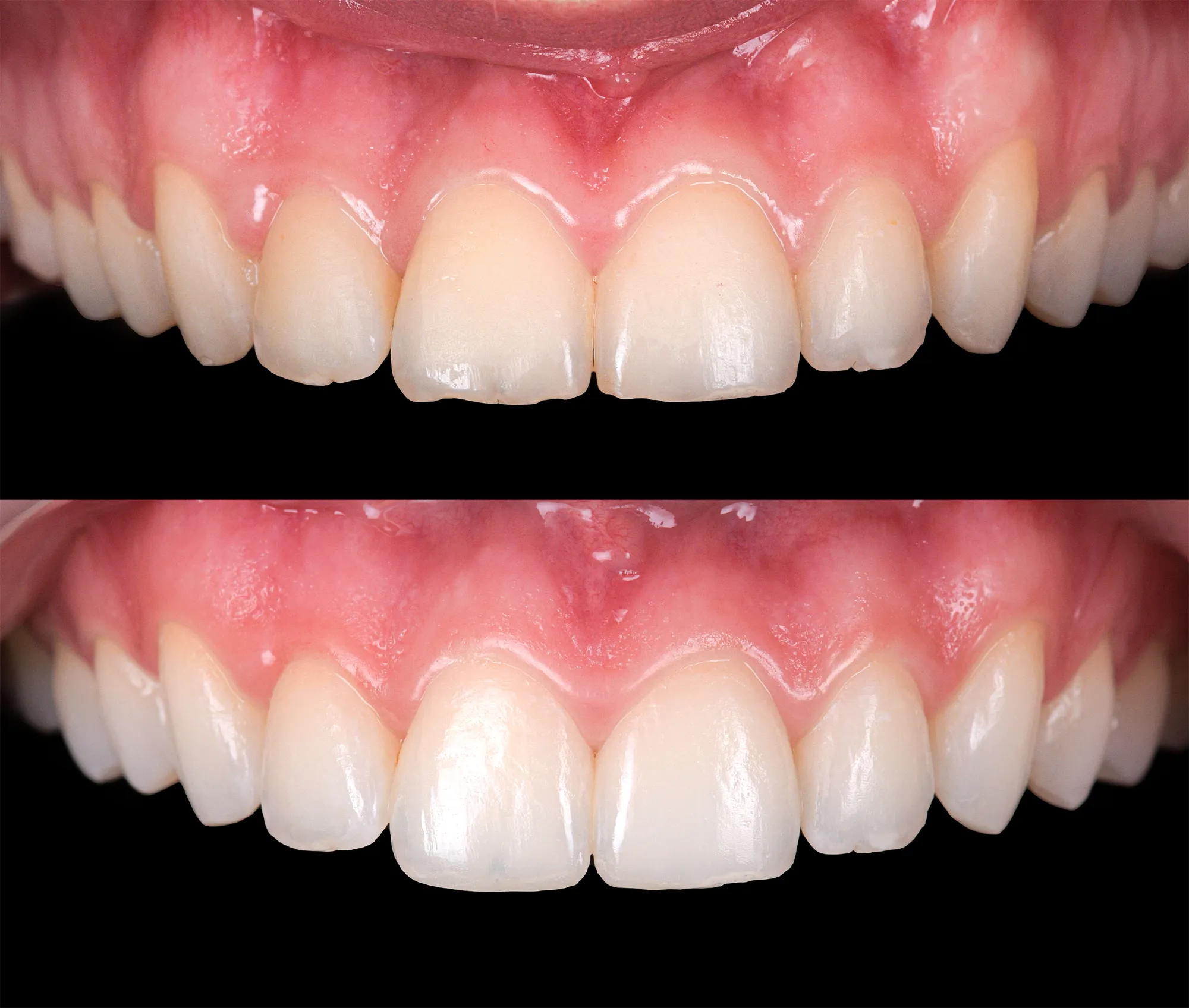
Lighter teeth, nothing removed
Whitening (bleaching) lightens your natural teeth. It changes no shape and removes no tooth structure. It suits healthy teeth that have darkened with age, coffee, tea or smoking. We plan it on its own or with your other treatment, so the shade fits everything around it.
 Treated byLoredana Chitimia
01 / 03
Check-up first
We look for the cause of the discolouration, check sensitivity and treat any decay or gum disease first. Then we tell you whether whitening will work and which method fits: at home, in the clinic, or both. It is not suitable during pregnancy or breastfeeding, or for children and teenagers.
02 / 03
Whitening, monitored
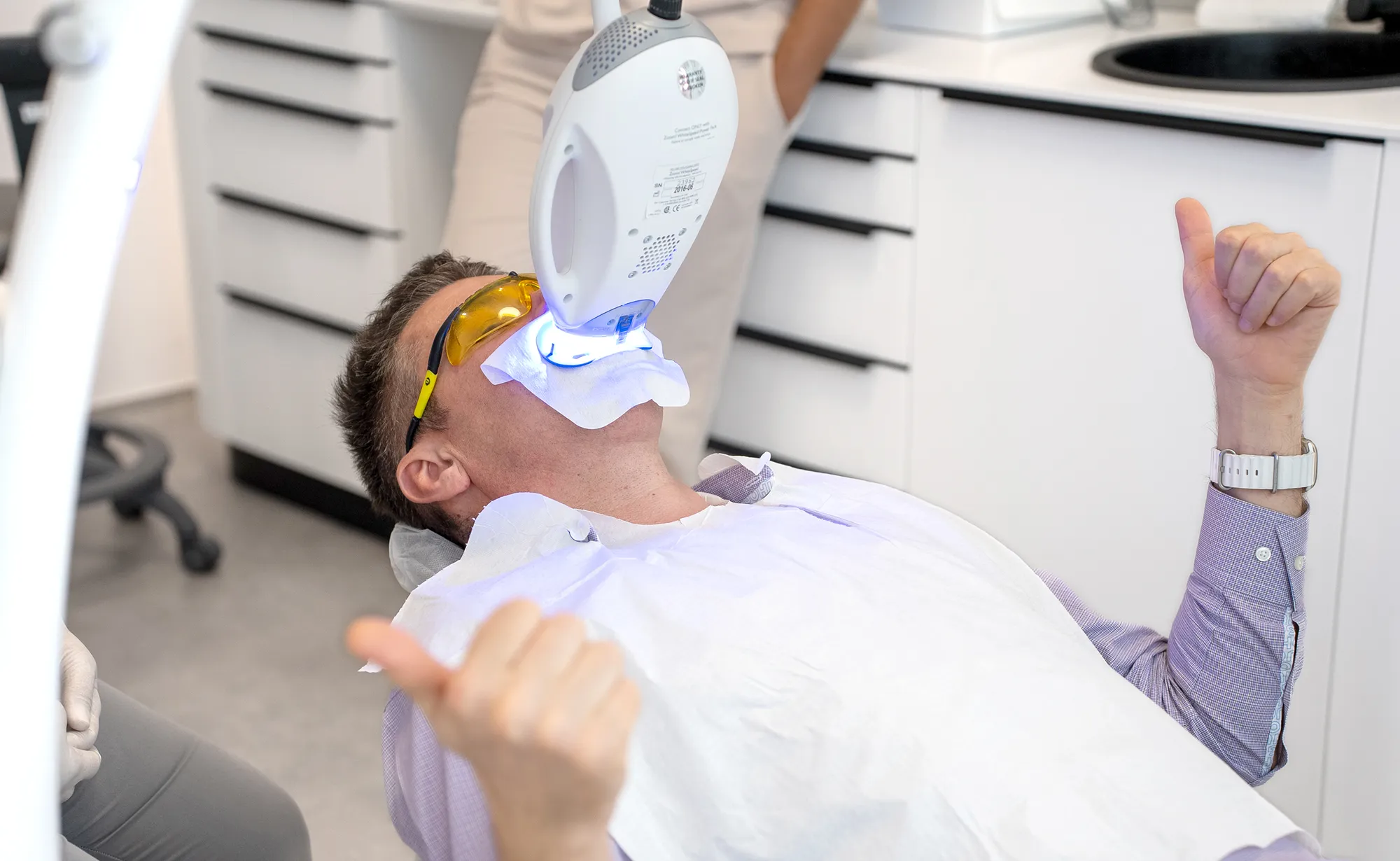
We use professional gels, in custom trays or applied in the clinic, with your gums isolated. Our team watches the process to keep sensitivity low and avoid overbleaching. No drilling, anaesthesia or recovery time is needed; some sensitivity during and after is common and passes.
03 / 03
Measured, then settled
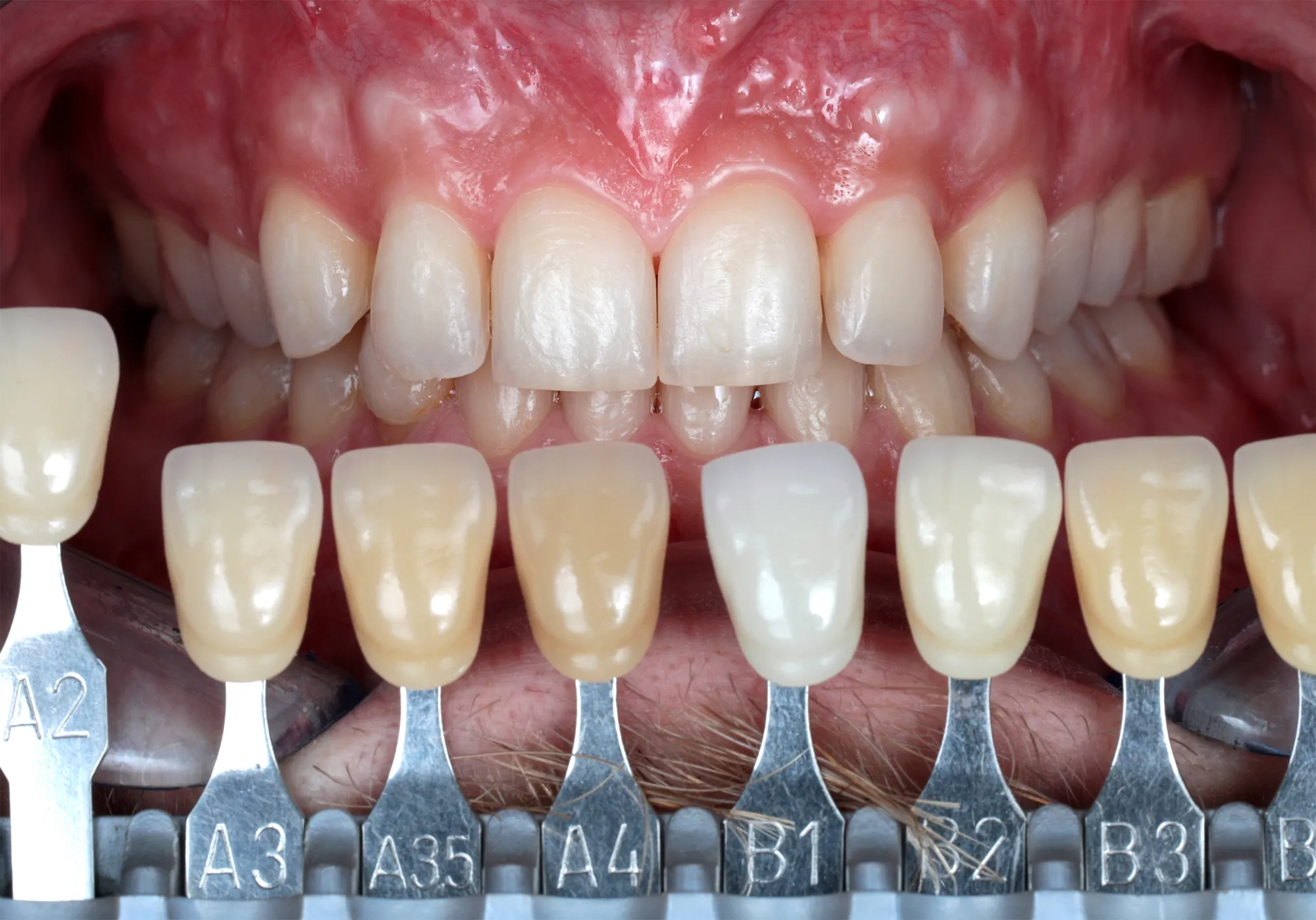
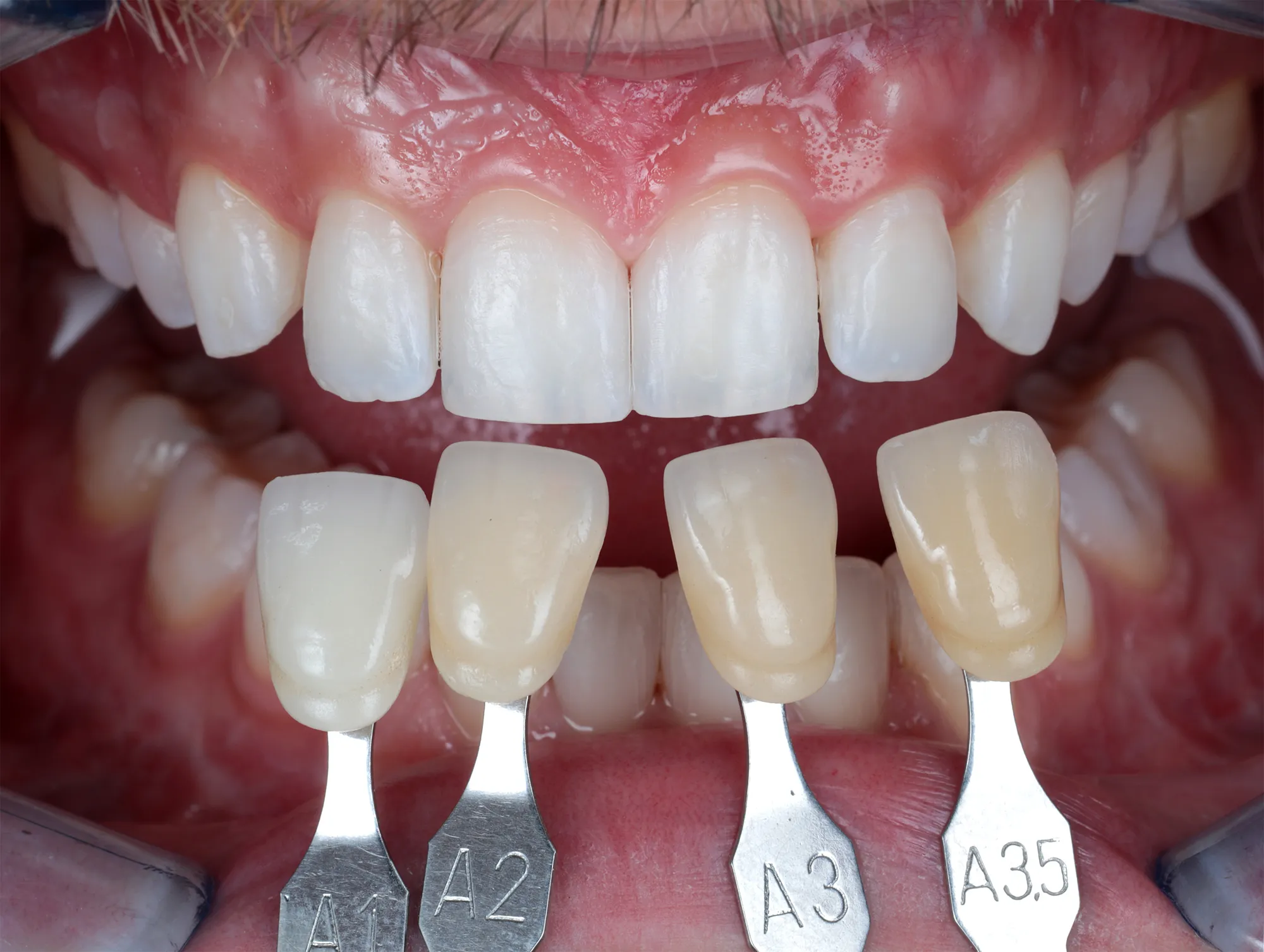
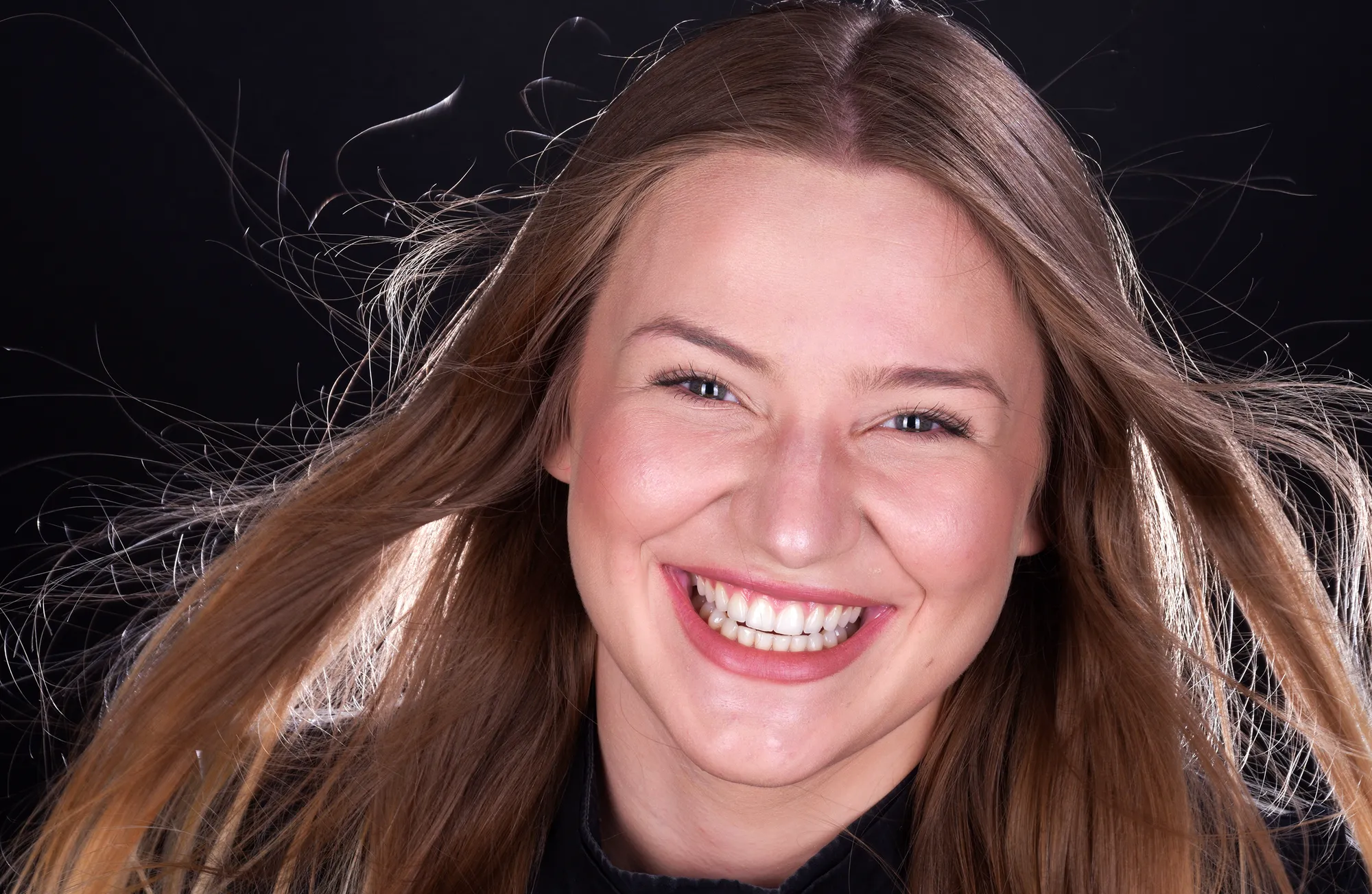
We record your shade before and after, with a shade guide and photographs in the same light, so you see the real change. We aim for a shade that suits your skin, your eyes and your age, with the depth and translucency of a natural tooth. The colour keeps settling for a short time after whitening, so if restorations follow, we match them once the shade is stable.
Keeping the result
The shade fades gradually, faster with coffee, tea, wine and smoking. We show you how to keep it; at check-ups and hygiene visits we look at the shade and suggest supervised touch-ups when needed.
Risks and limitations
Every treatment has possible side effects. Here is what you should know before deciding. We go through your own risks at the consultation.
Possible risks and side effects
- Temporary sensitivity during and after whitening
- Gum irritation if gel touches soft tissue (we isolate the gums)
- Fillings, crowns and veneers do not whiten
- Results fade gradually, faster with coffee, tea, wine and smoking
When it may not be suitable, or needs extra care
- Pregnancy and breastfeeding
- Untreated decay or gum disease
- Children and teenagers
This is general information; your diagnosis comes from an examination. Your doctor will explain the risks that apply to you before you agree to any treatment.
After treatment: Maintenance helps this treatment last longer. Long-term care programme →
What it costs
| In-office whiteningControlled whitening protocol with sensitivity management | €480 |
| Professional hygienePlaque made visible and removed with water, air and fine powder; ultrasonic scaling where needed | €100 |
Indicative prices, in euro. After your consultation you get your exact plan, in writing, before any treatment starts.
Teeth whitening: frequently asked questions
Is whitening safe for enamel?+
Used as directed, professional whitening is considered safe for enamel. Temporary sensitivity can occur. We check your risk factors first and adapt the protocol to you.
How long do the results last?+
Typically from several months to a few years, depending on diet, hygiene and habits. Occasional touch-ups keep the shade.
Will my teeth be sensitive?+
Possibly. Temporary sensitivity during and after whitening is common, usually mild and short-lived. We adapt the protocol to reduce it.
Can all teeth be whitened?+
No. Only natural teeth respond. Crowns, veneers and composite fillings keep their shade, which is why we plan them after whitening when needed.
Should I whiten before or after getting veneers or crowns?+
It depends on your plan. Usually before, so the restorations can match your new shade. What matters is deciding together which teeth are whitened and which are restored, so everything blends and stays stable.
Our cases
See 2 cases →

Start with a consultation
A dentist looks at your teeth and gums, listens to what you want and explains your options. You get a plan and a total price before any treatment starts.
Questions? Write to us