
Root canal treatment
Medically reviewed by Dr. Florin Cofar · last reviewed 17 October 2026
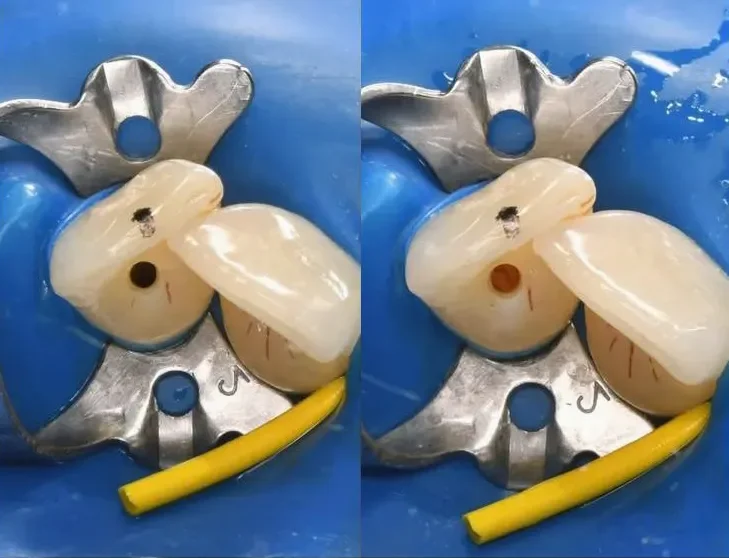
Keep your own tooth
Root canal treatment removes infected or inflamed tissue from inside a tooth and seals it, so you can keep the tooth. It is for teeth where deep decay, a leaking filling or an injury has reached the nerve. A saved tooth then needs the right restoration and regular check-ups to last.
 Treated byDr. Florin Bratiloveanu
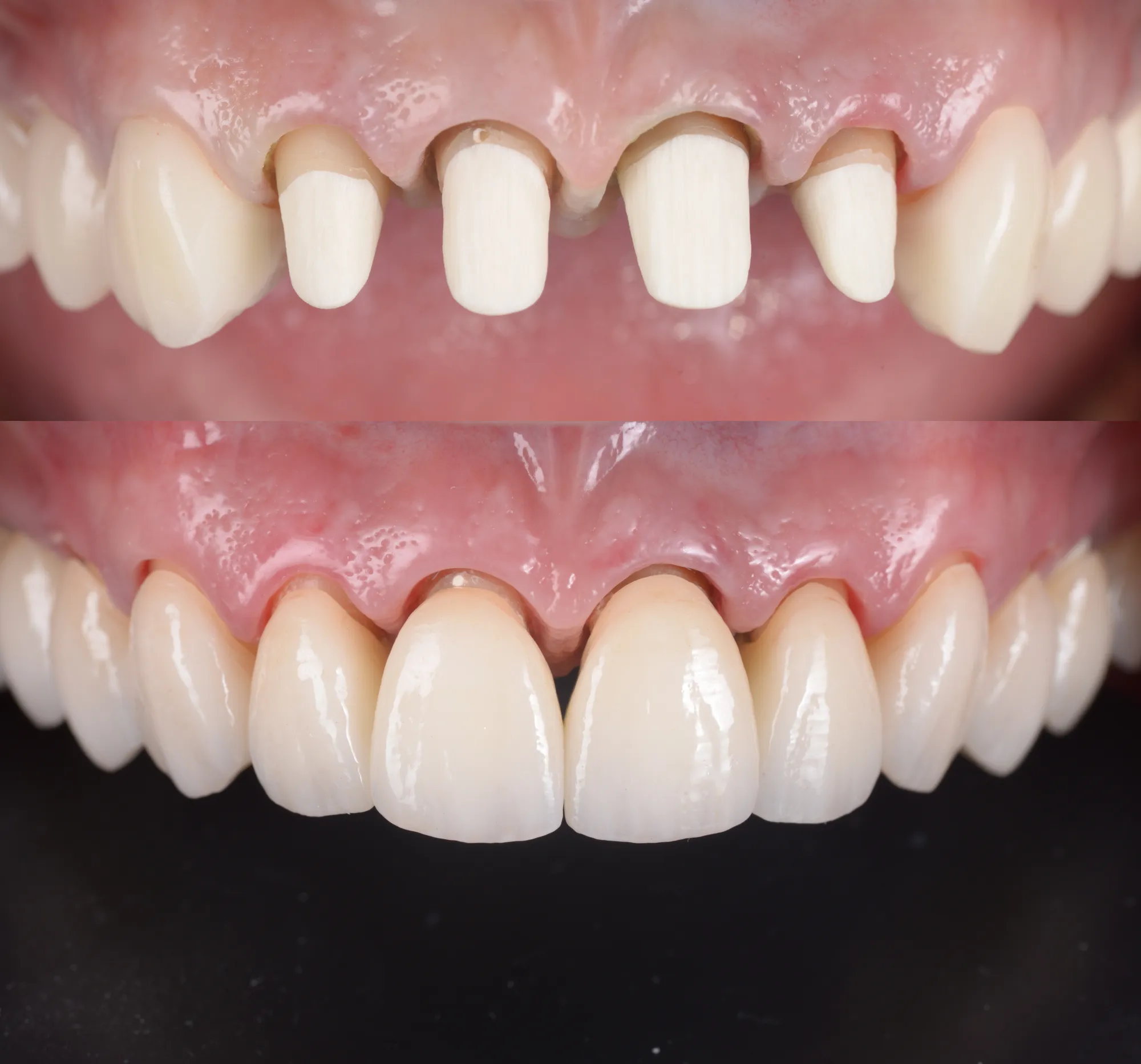
Planned for the restoration that follows
A root canal succeeds when the tooth works well for years afterwards, so the restoration is part of the plan from the first visit. Our lab, in the clinic, makes the custom post and core and the crown or onlay from scans of your tooth, all from one design. When a tooth's future is uncertain, the dentists involved weigh it together, so your options stay open.
The posts and crowns shown here: Dr. Adrian Argint and DT Ioana Popp.
Risks and limitations
Every treatment has possible side effects. Here is what you should know before deciding. We go through your own risks at the consultation.
Possible risks and side effects
- Tenderness for a few days after treatment
- A small risk that the infection persists and the tooth needs retreatment or minor surgery
- A treated tooth is more brittle and usually needs a crown or onlay
- Rarely, an instrument fragment remains in a very curved canal (the microscope reduces this)
When it may not be suitable, or needs extra care
- Teeth with fractures extending below the gum, or too little structure left to restore
This is general information; your diagnosis comes from an examination. Your doctor will explain the risks that apply to you before you agree to any treatment.
After treatment: Maintenance helps this treatment last longer. Long-term care programme →
What it costs
| Root canal treatment (microscope)Cleaning and sealing under magnification | €150 – €200 |
| Post-endodontic reconstructionMilled fibreglass post with core reconstruction | €120 |
| Ceramic unit (veneer or crown)Digitally designed, monolithic milled, finished by hand in our lab. Typical longevity 10–15 years | €650 – €900per unit |
Conscious sedation
Intravenous sedation, provided and monitored throughout by the anaesthesia and intensive care doctors of our partner clinic, Medical Town
Sedation dentistry →€600
Prices are indicative, in euro. Your exact plan and price are confirmed after diagnosis, before any treatment starts.
Root canal treatment: frequently asked questions
Does every root canal-treated tooth need a crown?+
Usually, a crown or an onlay, because a treated tooth is more brittle. When enough healthy structure remains, a composite filling can be enough.
Is the treatment painful?+
Usually not during treatment, because it is done under local anaesthesia. Some tenderness for a few days afterwards is normal. If you feel anxious, treatment under sedation is possible with our partner clinic, Medical Town.
How long does a root canal-treated tooth last?+
Typically many years with good care. It depends on the seal, your hygiene and the final restoration. In a small number of cases the infection persists, and the tooth needs retreatment or minor surgery.
What are the signs I might need a root canal?+
Persistent pain, sensitivity to heat or cold, swelling, a darker tooth or a pimple on the gum can mean infection inside the tooth.
How much does it cost?+
Root canal treatment under the microscope costs €150 – €200, depending on the number of canals. Most treated teeth then need a restoration: a fibreglass post (€120) and often a ceramic crown (€650 – €900). See the breakdown.
Start with a consultation
A dentist looks at your teeth and gums, listens to what you want and explains your options. You get a plan and a total price before any treatment starts.
Questions? Write to us