
Gummy smile correction
Medically reviewed by Dr. Florin Cofar · last reviewed 17 October 2026


Less gum, teeth in proportion
A smile can show too much gum for different reasons: gum covering part of the teeth, teeth that are short or worn, an upper jaw that sits low, or a lip that lifts high. The cause decides the treatment, so we find it first. Most often the answer is to uncover the teeth that are already there, by reshaping the gum and, when needed, the bone beneath it (crown lengthening).
The case on this page was treated by Dr. Florin Cofar, Dr. Adrian Argint and DT Ioana Popp.
01
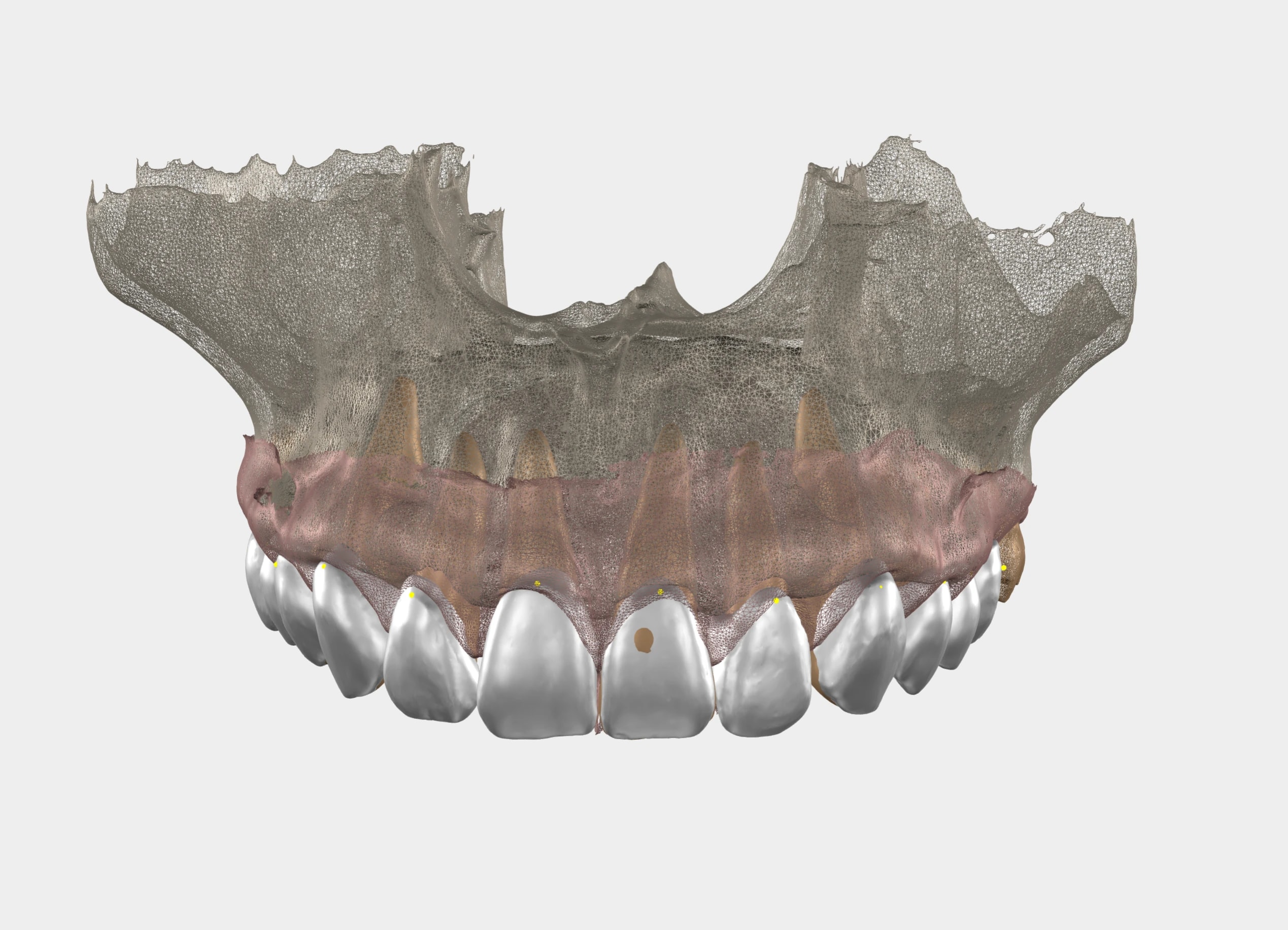
Designed from the final smile
We design the final teeth on your face first. Their length and proportions decide where the new gum line should be, so the gum is shaped to frame the teeth you will end up with. You see the design before anything starts (smile design).
02
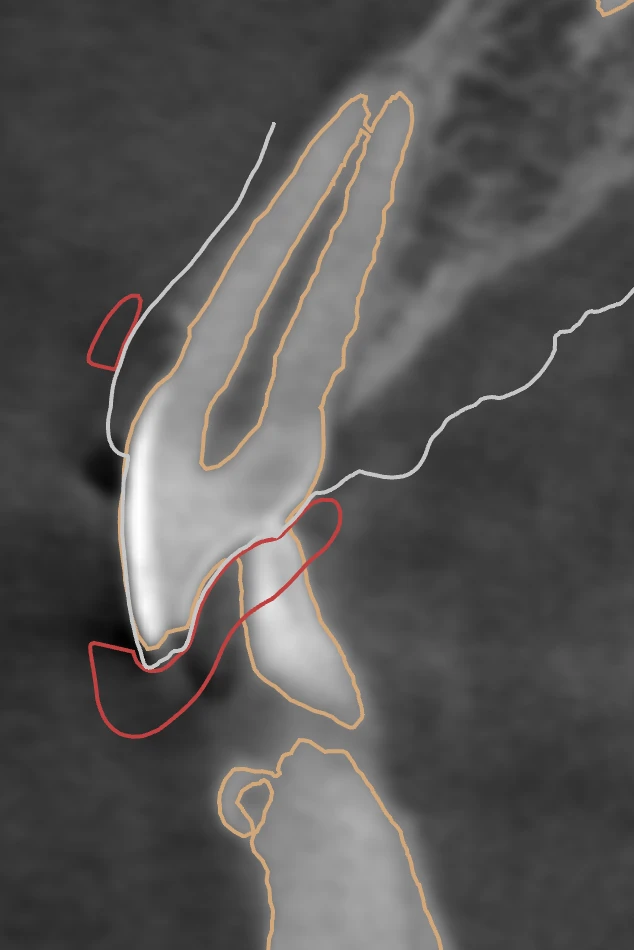
Flapless, or with a small flap
A 3D X-ray shows how far the bone sits from the planned gum line. When there is enough room, the gum is reshaped through a guide without opening it (flapless). When the bone needs reshaping too, we lift a small flap to reach it. The decision comes from the design and the scan, before the day of treatment.
03
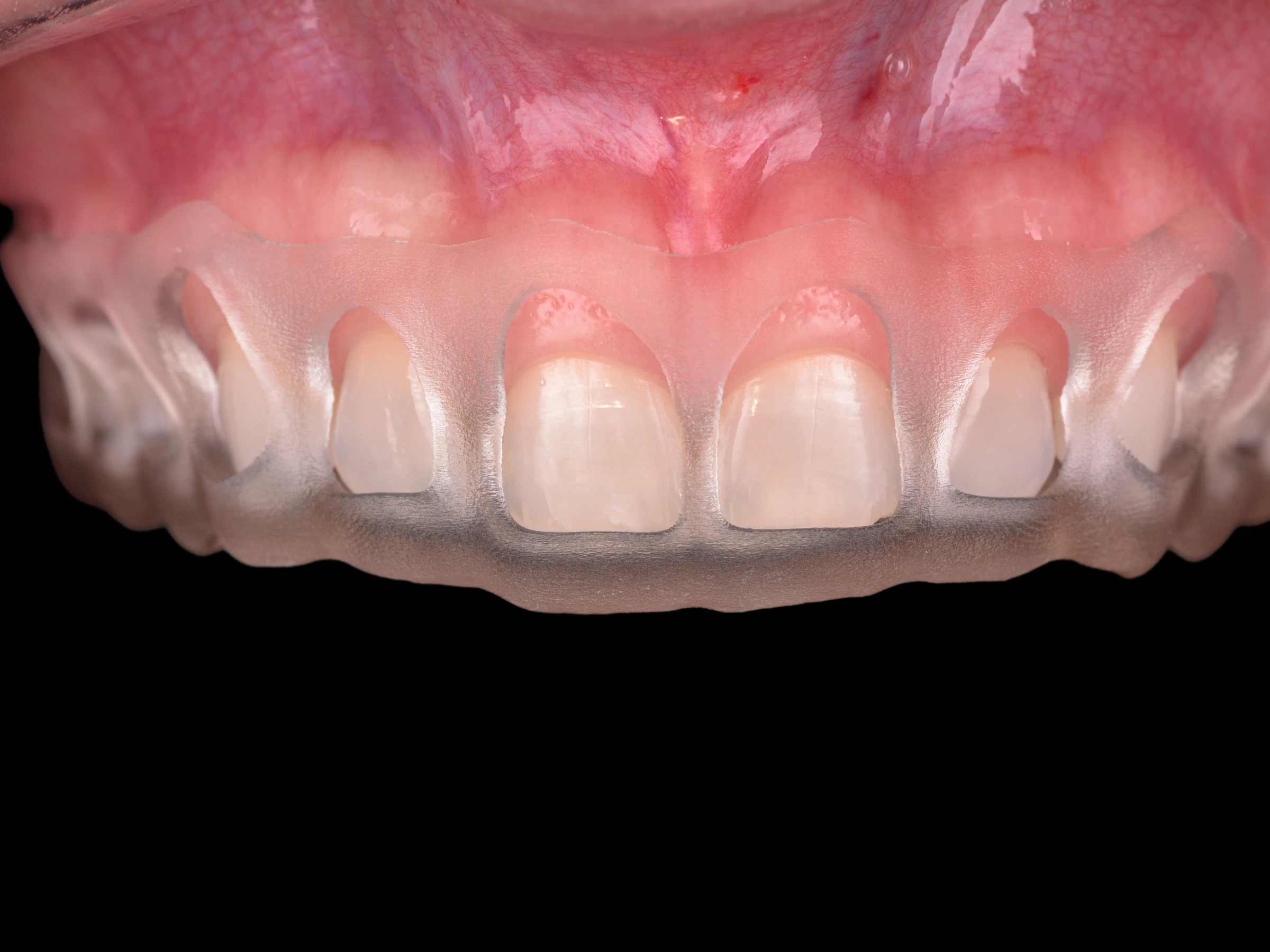
A guide made from the design
The design cascades into a surgical guide that sits on the teeth and marks exactly where the new gum line goes. The gum, and the bone when needed, are shaped along it, so the result follows the plan.
04
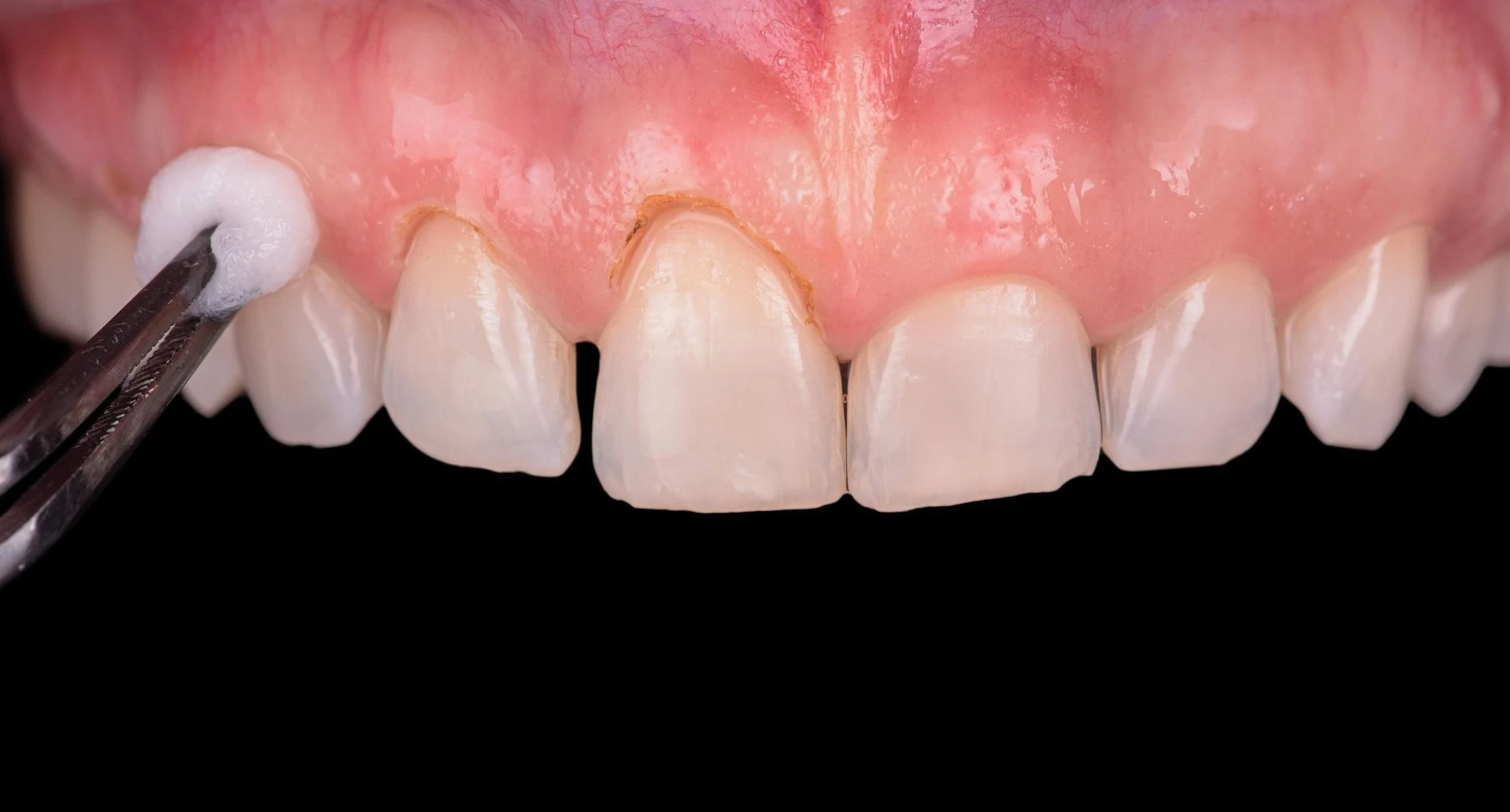
Gum first, then the teeth
The gum is always treated before the final restorations. The provisionals made from the design guide how it heals, and the final work follows once the new gum line has settled. The photo shows one side right after reshaping, next to the side not yet treated.
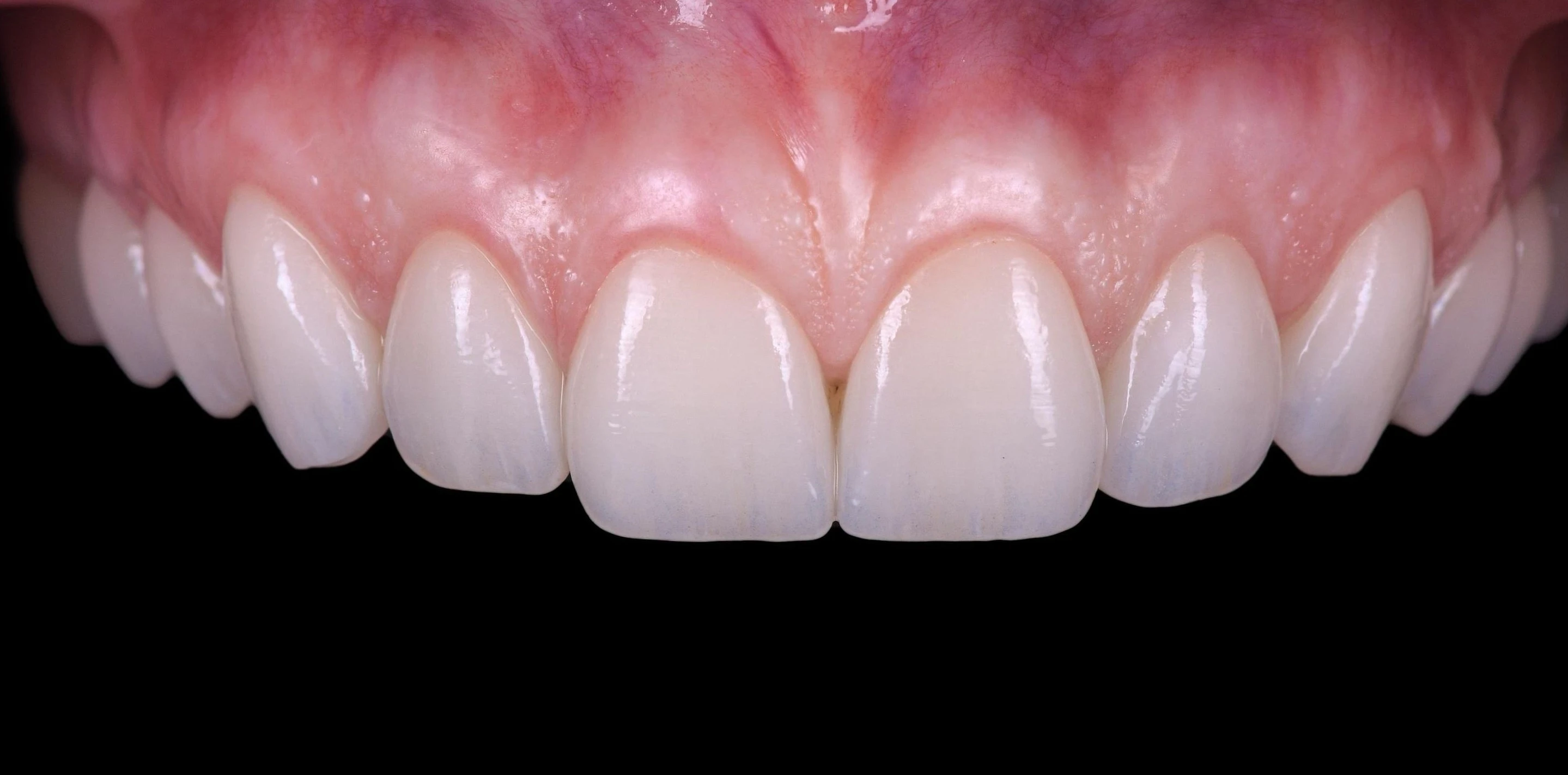
The design finds the right path
A gummy smile can come from the gum, the teeth, the jaw or the lip, and treating the gum often works together with other treatments. The design reconciles them: it shows which combination gives the result you want, and in what order. Whether you need only the gum reshaped, or veneers or crowns as well, depends on it; when the design includes both, they are done together, in the same session, and the gum heals around the shape of the new teeth.
Fillers
When the lips are thin or lift high, a filler placed by a specialist can change how much gum shows.
Botulinum toxin
Softens a lip that lifts high when you smile. We work with the plastic surgeons at our partner clinic, Medical Town, on these procedures.
Orthodontics
Moves teeth and gum together into their planned position, sometimes anchored on small temporary screws for larger movements (skeletal anchorage).
Surgical orthodontics
When the upper jaw itself sits low, orthodontics combined with jaw surgery (orthognathic surgery) corrects the cause.
Prosthetics
Veneers or crowns, when the design calls for a change in shape, colour or proportion, done together with the gum so it heals around the new teeth.
Gummy smile correction: frequently asked questions
What causes a gummy smile?+
Gum that covers part of the teeth, short or worn teeth, an upper jaw that sits low, or a lip that lifts high. Often it is a combination, which is why the diagnosis comes first.
Do I need veneers as well?+
It depends on the design. When it includes veneers or crowns, they are done together with the gum, in the same session.
Is it painful?+
Usually not during treatment, which is done under local anaesthesia. Expect swelling and tenderness for one to two weeks, and the newly exposed tooth surface can be sensitive for a while.
Will I need stitches?+
Not when the gum is reshaped without a flap. When a small flap is needed to reshape the bone, we use fine stitches, usually ones that dissolve on their own.
Is the result long-term?+
Usually. Once the gum and bone have healed at their new level, the result is stable in the long term. There is a small risk that the gum recedes beyond the planned line; regular check-ups and good hygiene help keep it in place.
How much does it cost?+
Guided gum reshaping costs €800, planned from your final smile design. The complete diagnosis (€150) comes first — see the breakdown.
Risks and limitations
Every treatment has possible side effects. Here is what you should know before deciding — we go through your own risks at the consultation.
Possible risks and side effects
- Swelling and tenderness for one to two weeks
- Temporary sensitivity of the exposed root surface
- Gum position needs time to settle before final restorations
- Small risk of gum recession beyond the planned line
When it may not be suitable, or needs extra care
- Active gum disease
- Uncontrolled diabetes or heavy smoking
This is general information; your diagnosis comes from an examination. Your doctor will explain the risks that apply to you before you agree to any treatment.
After treatment: long-term care
Finishing treatment is only half the job. We set a check-up and hygiene rhythm for your case — usually every 3–6 months: every 3–4 months after gum disease or with implants, every 4–6 months otherwise — track changes over time, and keep your saved design for the years ahead.
About long-term care →What it costs
| Guided gum recontouringGum sculpting guided by the final design and surgical planning | €800 |
| Complete diagnosisCBCT, facial and intraoral scans, HD photographs — compiled into a full digital patient record | €150 |
Pay in installments
You can spread the cost of your treatment over monthly installments through TBI Bank. Ask us at your consultation, and we'll help you with the application.
About TBI Bank financing ↗Prices are indicative, in euro. Your exact plan and price are confirmed after diagnosis, before any treatment starts.