
How veneers and crowns are bonded
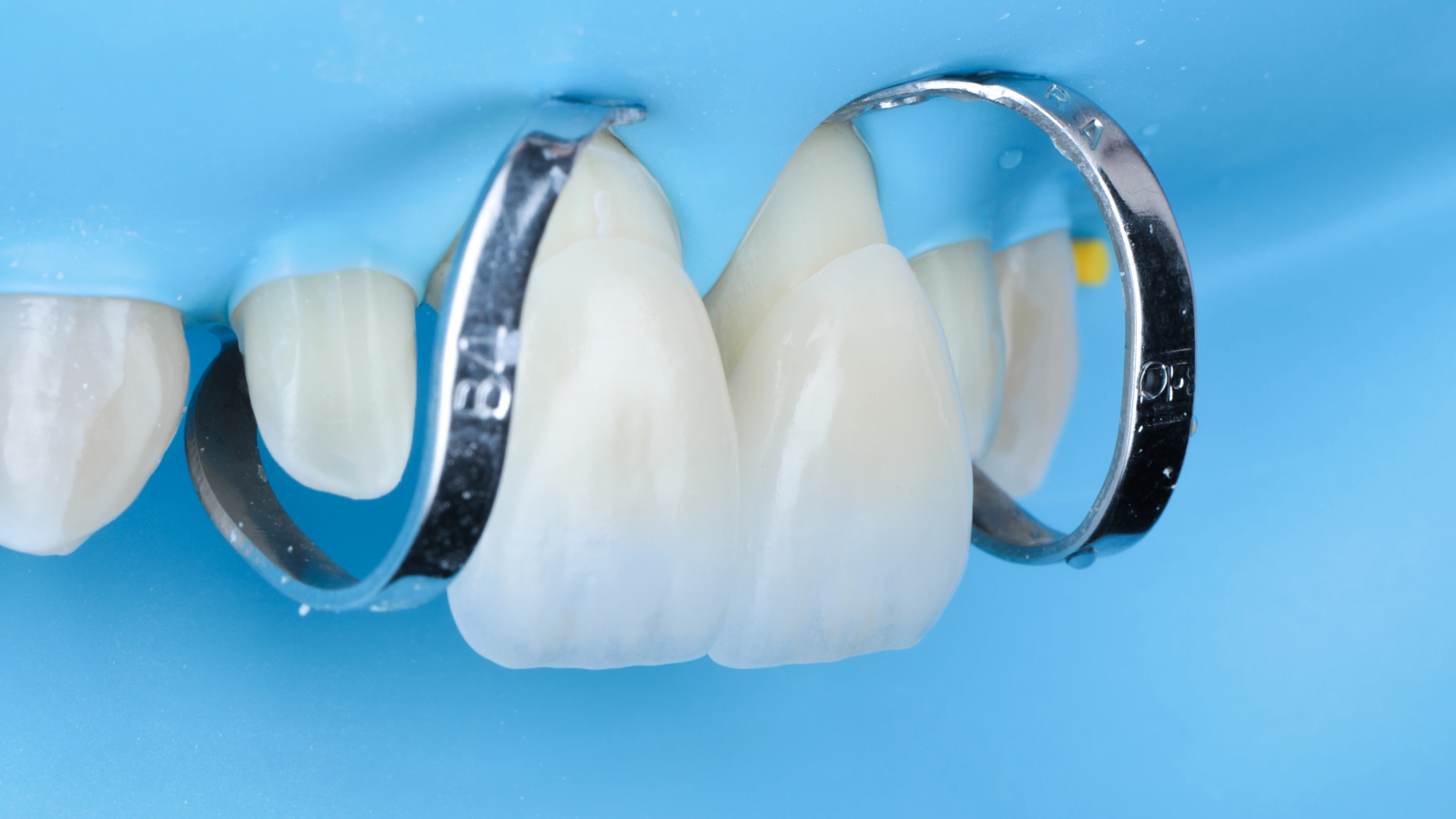
The step you never see
A veneer or crown is only as good as its bond to the tooth. Ceramic bonded well to a clean, dry tooth becomes one strong unit with it; a weak bond lets saliva and bacteria in at the edge. So the last appointment is slow and precise on purpose. This is how we do it, shown on a real case.
Photos from a case treated by Dr. Adrian Argint and DT Ioana Popp.
01
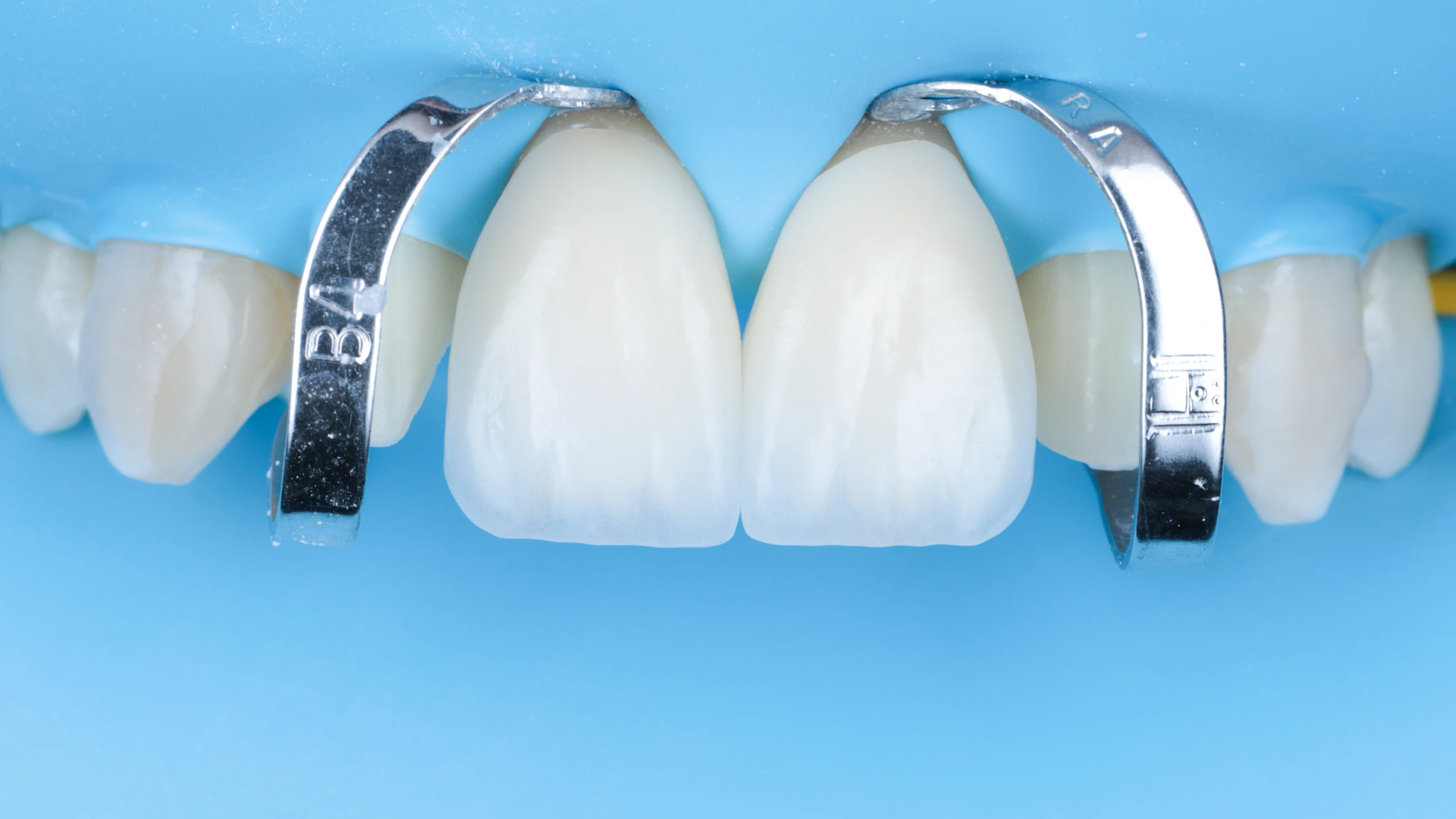
Try-in first
You see the veneers or crowns on your teeth before anything is bonded, in natural light, smiling and speaking. We check fit, edges and colour, and bond only when they feel right to you.
02
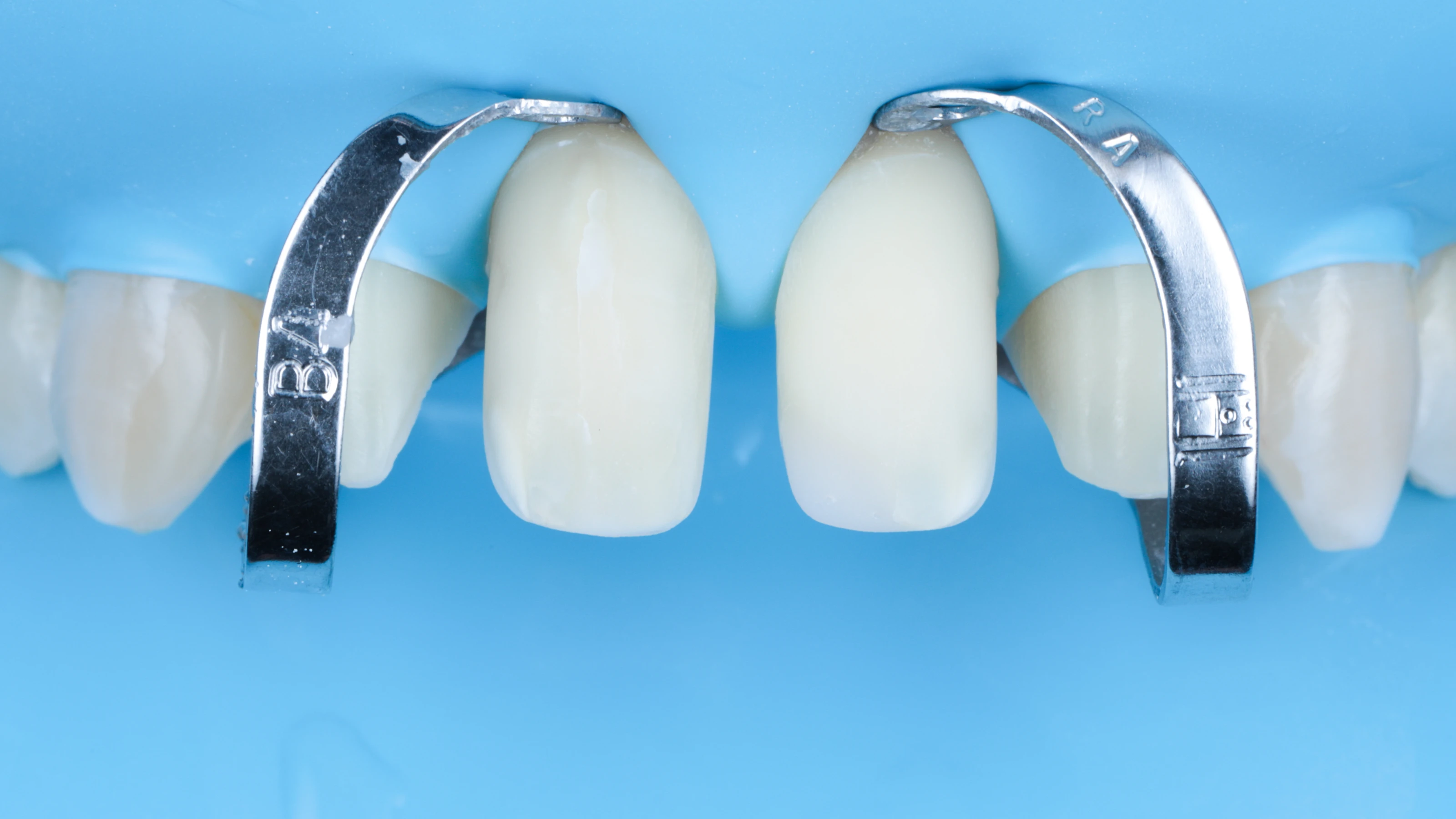
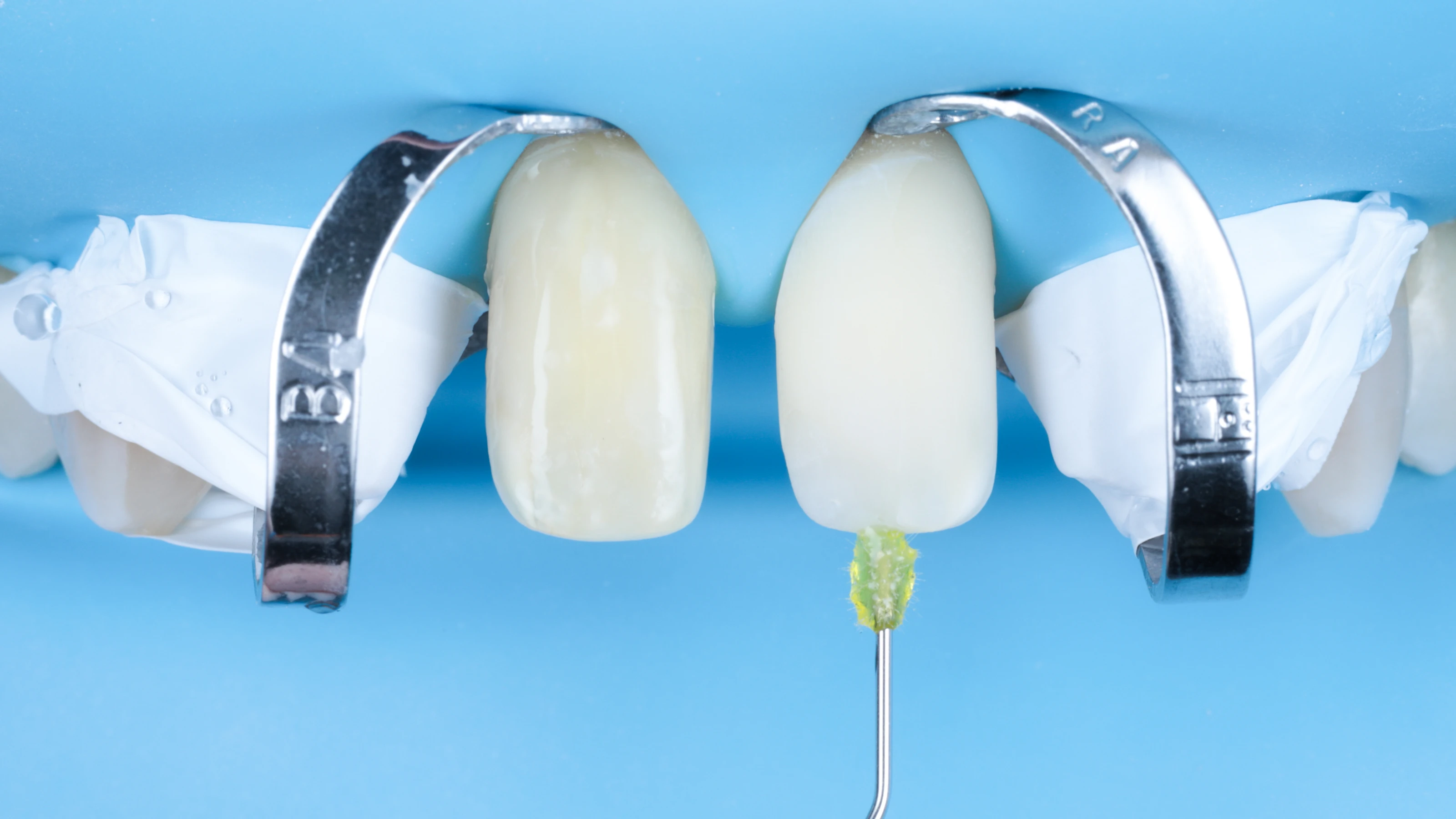
Isolated from saliva
A thin rubber sheet (rubber dam) and small clamps keep the teeth dry and the gums out of the way. Bonding needs a completely dry surface, and the dam also keeps everything out of your mouth.
03
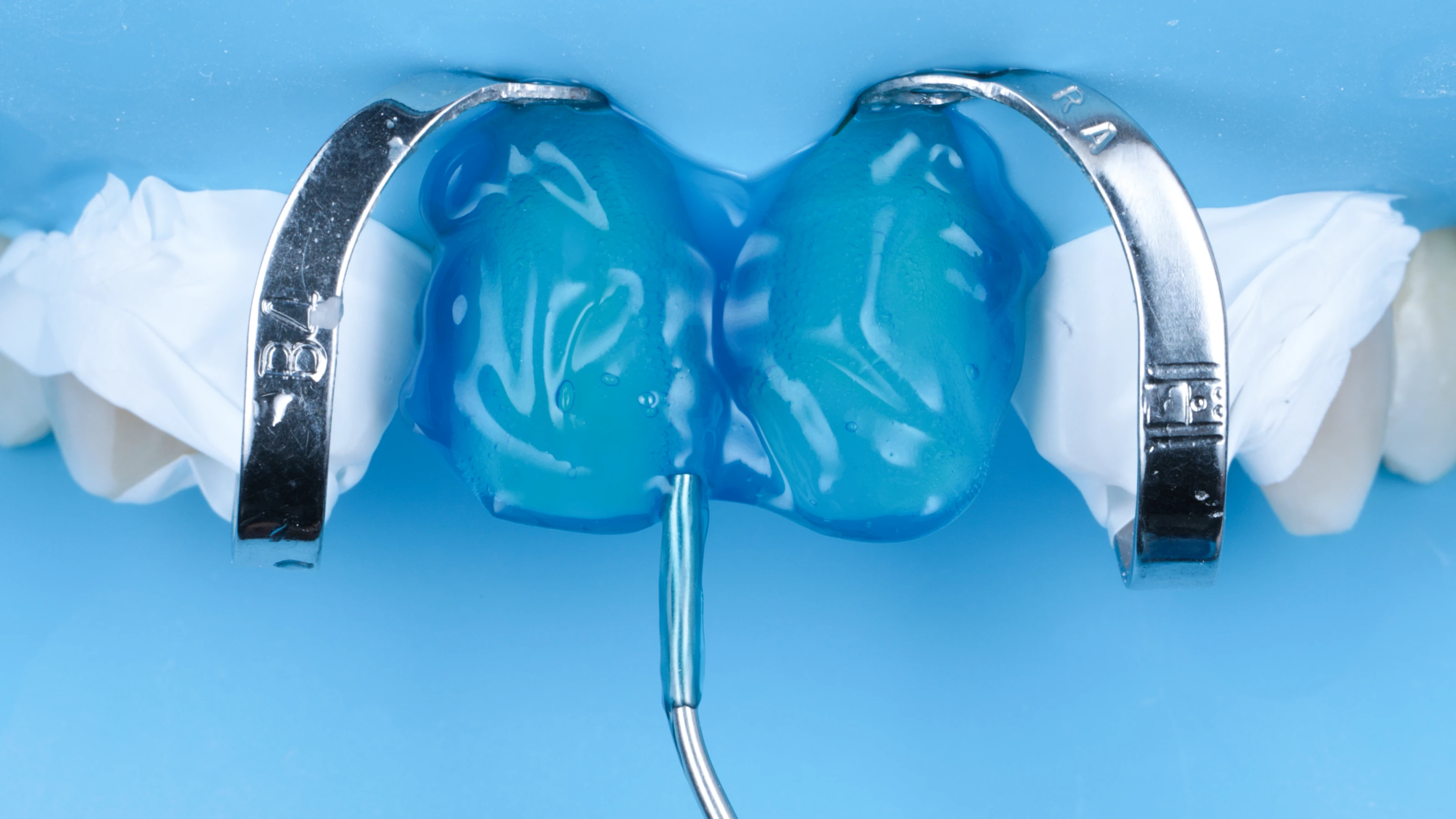
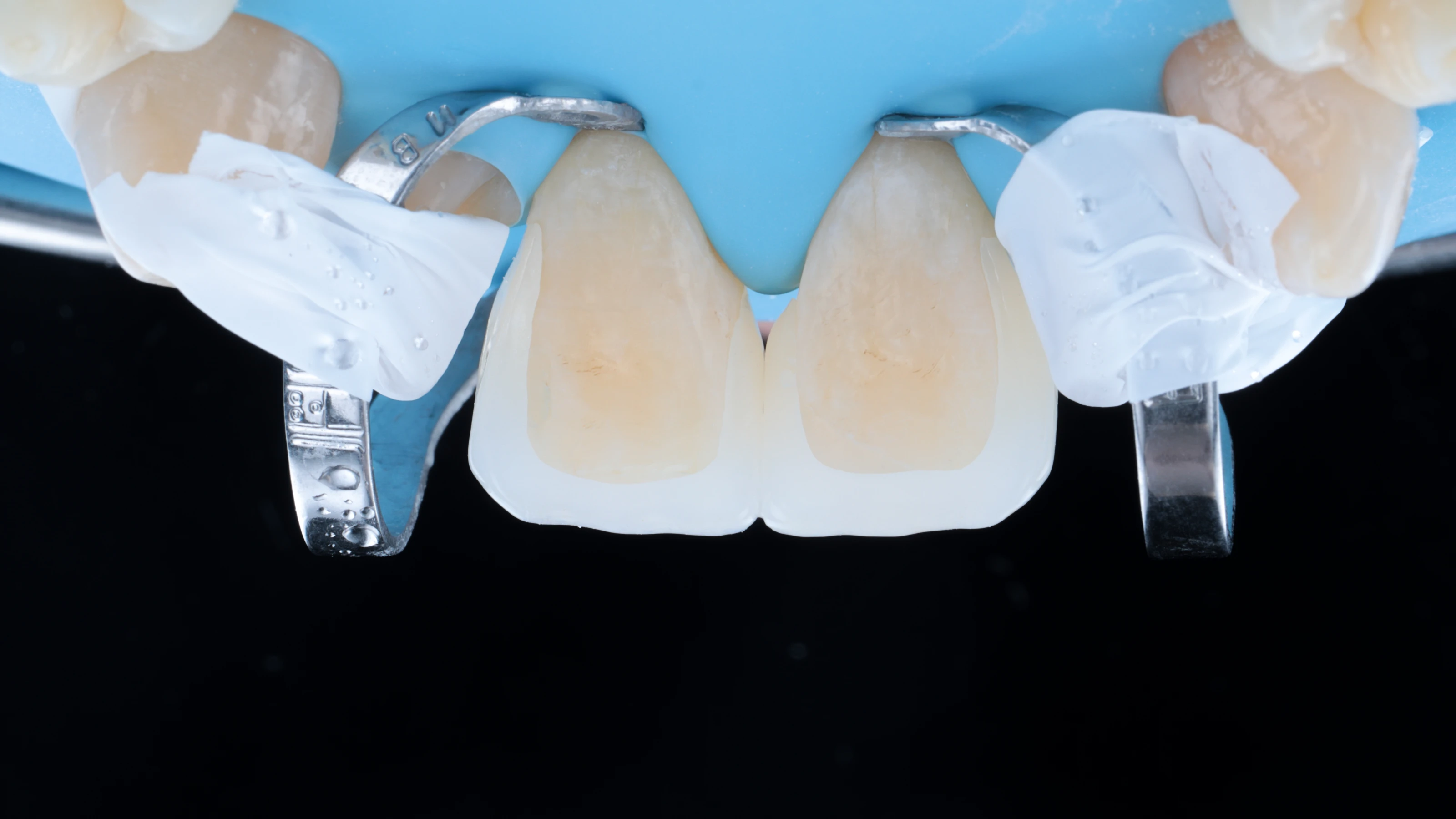
Surfaces cleaned and conditioned
The tooth is cleaned, then conditioned with a gel that prepares it to hold the bond. The inside of the ceramic is treated in the lab and again just before bonding.
04
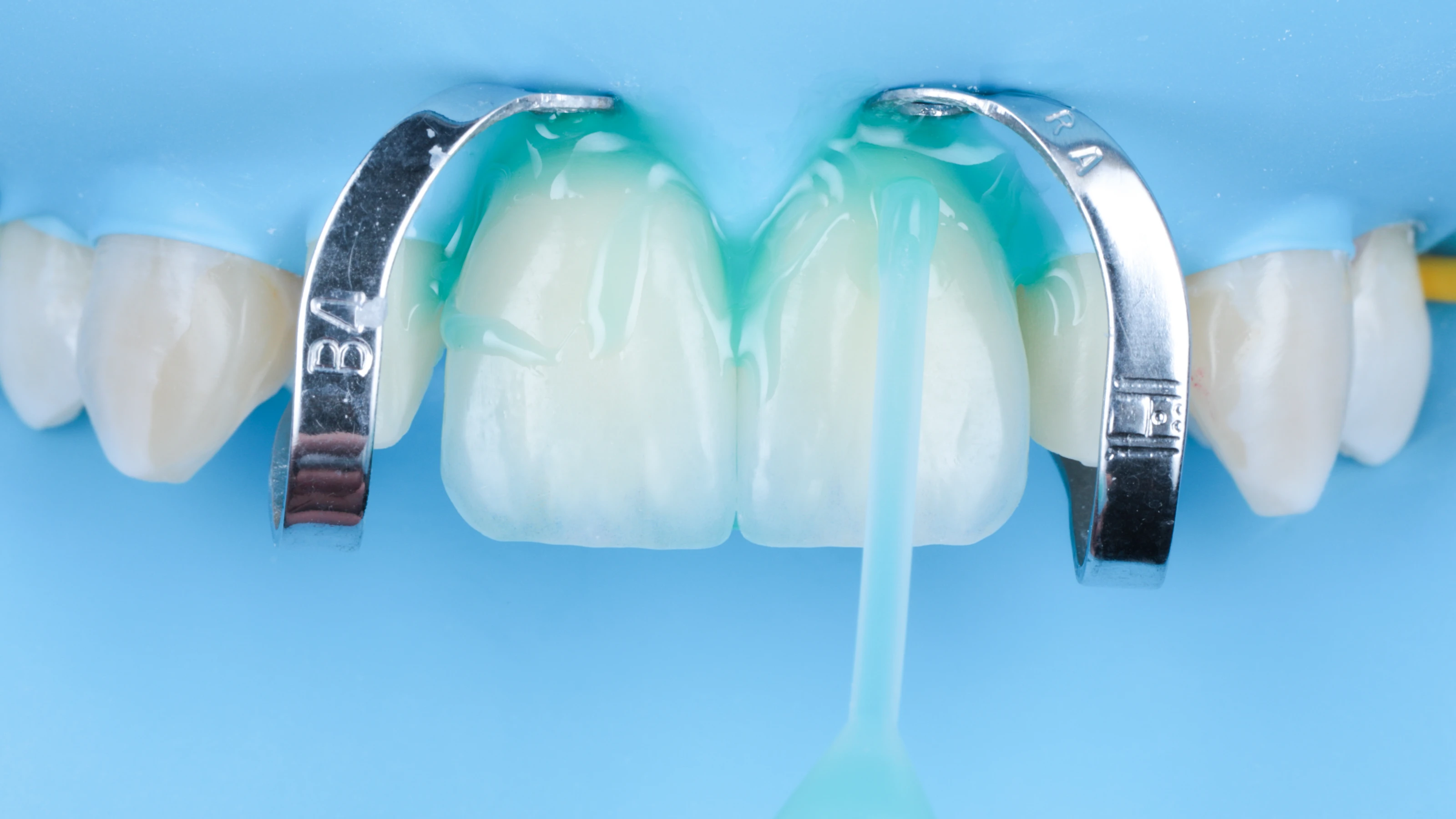
Bonding agent applied
A thin bonding layer is applied to the tooth and to the ceramic. The neighbouring teeth are protected so nothing bonds where it shouldn't.
05
Seated in place
The veneers or crowns are seated with a resin cement and held in position. We check each edge before the cement sets.
06
Cleaned and cured
Excess cement is removed from every edge, then the cement is cured under a protective gel so it sets fully at the surface. Finally we check your bite and polish the edges.
Veneers and crowns
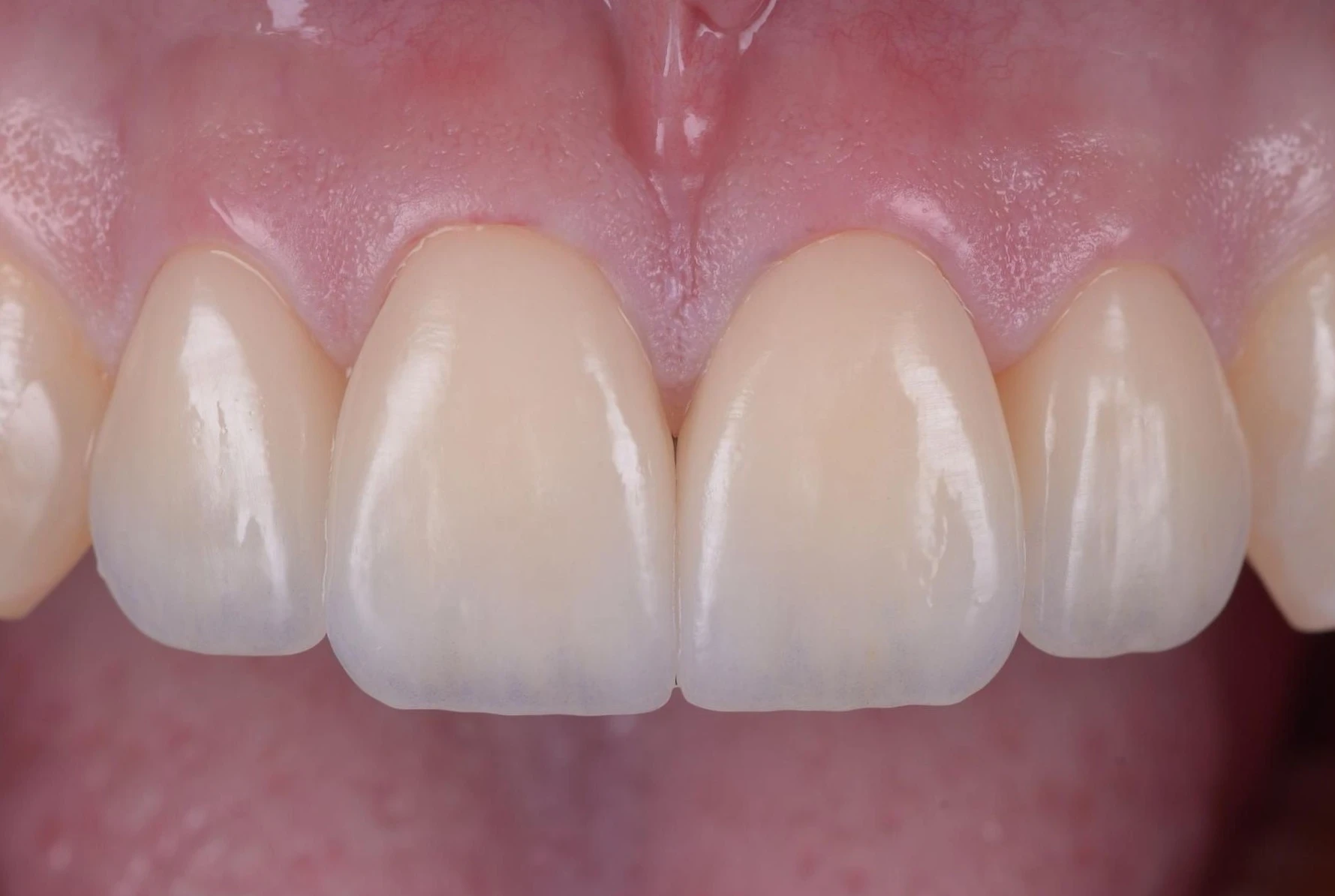
This is how the veneers looked right after the rubber dam was removed. Veneers and thin ceramic crowns are bonded this way. Some stronger ceramics can be cemented with a simpler protocol; the material, chosen in your design, decides which. Either way, the try-in, the clean dry field and the careful removal of excess cement stay the same.
Veneers · Dental crowns · How veneers and crowns are prepared
Bonding: frequently asked questions
Does bonding hurt?+
Usually not. When a tooth is sensitive, we use local anaesthesia. The rubber dam can feel unusual at first, but most people find it comfortable.
How long does it take?+
Usually one to two hours for a few teeth, depending on how many are bonded.
Can a veneer or crown come off?+
It is uncommon when bonding is done under isolation. If it happens, it can often be bonded again; we keep your saved design in case a new one is needed.
Why does it take so long?+
Each step, from isolation to curing, affects how well the ceramic stays on the tooth and how healthy the edge stays. We take the time it needs.